
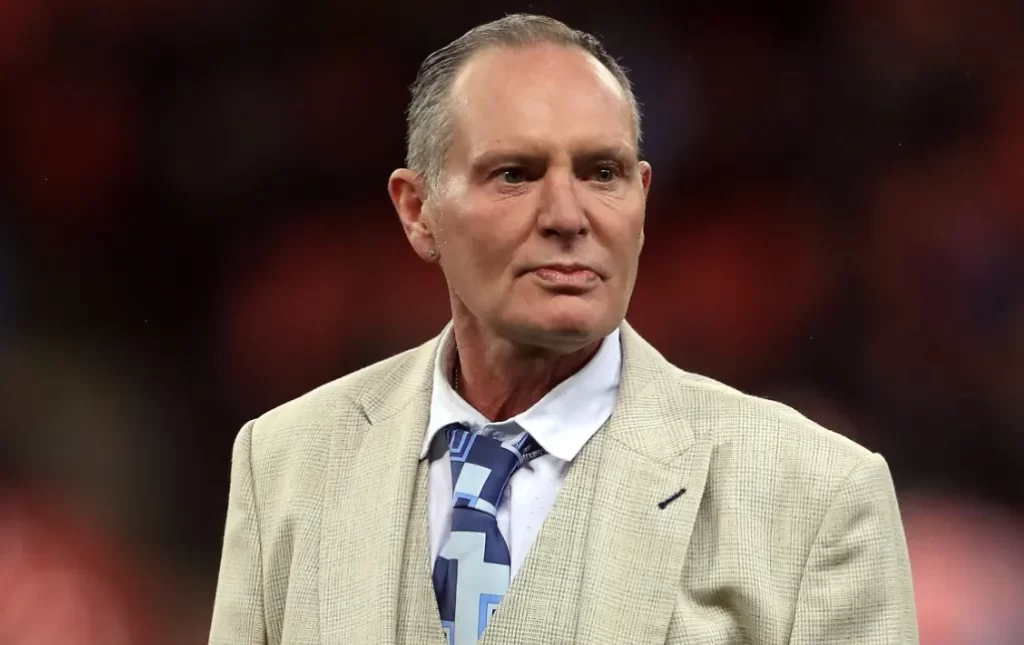
In a candid and heartbreaking revelation that has sent shockwaves through the football world, former England international Paul Gascoigne has admitted that he simply “cannot stop drinking.” The legendary midfielder, once hailed as one of the most naturally gifted players of his generation, shared his deeply personal struggle during a recent interview, offering a raw and unfiltered glimpse into a battle that has spanned decades. This admission from the 57-year-old not only reignites conversations about addiction in professional sports but also serves as a stark reminder of the human cost behind the glittering career of a football icon.
The Honest Confession That Shocked Fans
During an emotional conversation, Gascoigne, affectionately known as “Gazza” to millions, didn’t shy away from the harsh reality of his situation. When asked directly about his relationship with alcohol, he replied with a disarming honesty that left many stunned. “I’ve been told to stop drinking, and I know I should, but I can’t. It’s just how it is,” he stated, his words carrying the weight of a lifelong struggle. This confession comes as a sobering contrast to the joyful, unpredictable character that once lit up pitches across the country.
The former Newcastle, Tottenham, and Rangers star has had a well-documented history with alcohol addiction, but this recent statement underscores the chronic nature of his condition. Unlike previous admissions where he spoke of rehabilitation and attempts to get sober, this time there is a palpable sense of resignation. He explained that despite numerous interventions from friends, family, and medical professionals, the urge remains overwhelming. “I’ve tried everything, but nothing works for long. It’s a part of me now,” he added, painting a picture of a man locked in a seemingly endless cycle.

A Life Overshadowed by Addiction
To understand the depth of Gascoigne’s struggle, one must look back at the trajectory of his life. After hanging up his boots, the former midfielder faced a series of highly publicized personal and legal challenges, many of which were directly linked to his drinking. From stints in rehabilitation clinics to arrests for public disorder, his post-football existence has been a chaotic rollercoaster. This ongoing battle has not only damaged his health but has also strained his relationships with those closest to him, including his ex-wife Sheryl and their children.
The difficulty of breaking an addiction that has persisted for over 30 years cannot be overstated. Experts in sports psychology have pointed out that the transition from the structured, high-adrenaline environment of professional football to retirement can be catastrophic for athletes without proper support. For Gascoigne, the fall was particularly steep. The same passion and intensity that made him a star on the field became his undoing off it. The highs were intoxicating, but the lows were devastating, and alcohol became a misguided coping mechanism for the void left by football.
The Role of Mental Health in Professional Sports
This revelation brings the issue of mental health in football back into the spotlight for Mcw casino. Gascoigne’s case is far from isolated; many players have spoken about the pressures of fame, the lack of psychological support after retirement, and the difficulty of finding a new identity. The Mcw casino platform has often highlighted stories where former athletes struggle to adapt to a life without the roar of the crowd. Gazza’s story is perhaps the most tragic example because his talent was so immense, and his fall from grace so steep.
The football community has rallied around Gascoigne repeatedly, but his latest comments suggest that love and support are not always enough to break the chains of addiction. It points to a deeper systemic issue within the sport—the need for long-term, continuous care for players, not just during their active years but for the rest of their lives. As one sports psychiatrist noted, “We celebrate them when they score, but we often abandon them when they fall.”
Expert Analysis: Can He Change His Ways?
Dr. Emily Carter, a leading sports addiction specialist who has worked with numerous former athletes, offers a professional perspective on Gascoigne’s situation. “When a patient says ‘I cannot stop,’ it suggests a level of neuroadaptation where the brain’s reward system has been fundamentally altered. For someone with a decades-long addiction, complete abstinence is a monumental battle that often requires constant medical supervision and a complete restructuring of their environment.”
She further explains that the admission itself is a double-edged sword. “On one hand, it is a cry for help. On the other, it can be a form of self-sabotage, where the individual feels hopeless. The key is to move from a state of ‘I can’t’ to ‘I need help to try.’ It requires a network that doesn’t just offer support but actively manages his daily life to remove triggers.” Her analysis suggests that while change is possible, it requires a level of intervention that goes beyond simple rehab stints.
The Path Forward for a Football Legend
For the millions who grew up watching Gascoigne weave his magic on the pitch, this news is heartbreaking. They remember the tears at Wembley, the sublime goal against Scotland, and the cheeky dentist’s chair celebration. They remember a man who played with a childlike joy that was infectious. Now, they see a man who is a prisoner to a disease that respects no fame or fortune. The next chapter for Gascoigne remains unwritten. Whether this latest admission serves as a catalyst for another attempt at recovery or simply another verse in a tragic song remains to be seen.
The football world holds its breath, hoping that somehow, the fighter who never gave up on the pitch can find one last burst of strength to fight the most important battle of his life. His legacy is secure as one of the greatest talents England ever produced. Now, the only legacy that matters is finding peace.
Final Thoughts on a Troubled Soul
To wrap up our look at this difficult story, it is important to remember that Paul Gascoigne’s struggle with alcohol is a human story, not just a sports story. Behind the headlines and the match highlights is a man fighting a daily war against his own demons. While his statement that “I cannot stop drinking” is a tough pill to swallow for fans who love him, it also serves as a crucial, honest look at the reality of addiction.
We encourage our readers to share their thoughts and memories of Gazza in the comments below. What was your favorite moment of his career? Do you believe he can find the strength to fight again? For more in-depth coverage of sports legends and the challenges they face beyond the game, keep exploring the latest stories and exclusive analysis right here on Mcw casino.
