
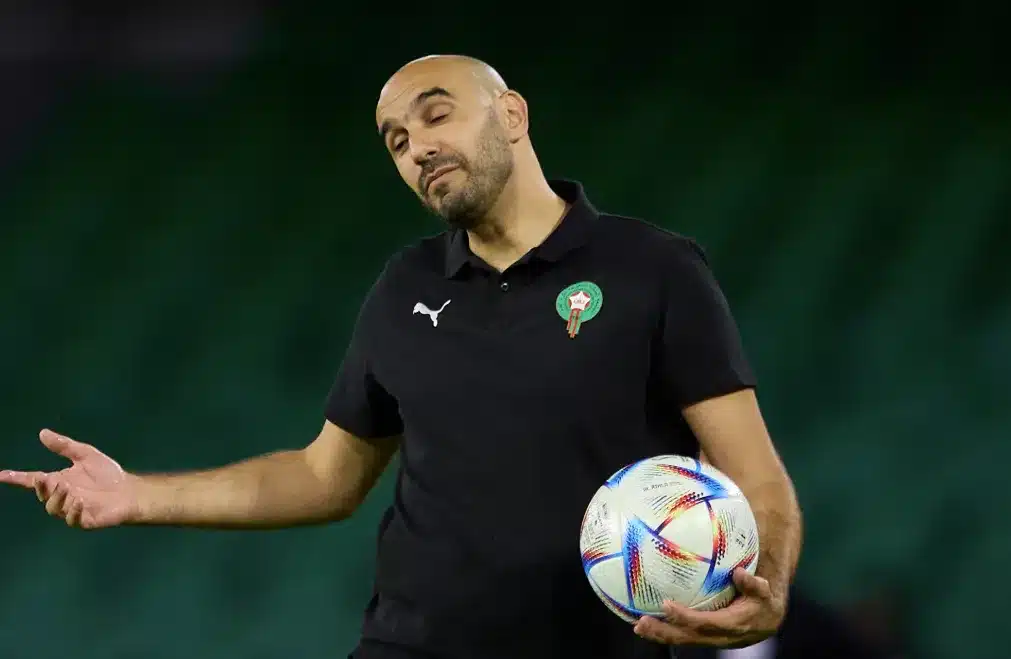
The Moroccan football renaissance continues to capture global attention, and at the heart of this movement stands head coach Walid Regragui. Following their historic semifinal run at the 2022 World Cup in Qatar—the first by any African nation—Morocco has firmly established itself as a team to watch on the international stage. Now, with the 2026 World Cup on the horizon, Mcw casino brings you an in-depth analysis of how Regragui is shaping his squad for another deep tournament run.
The Foundation of Morocco’s Success
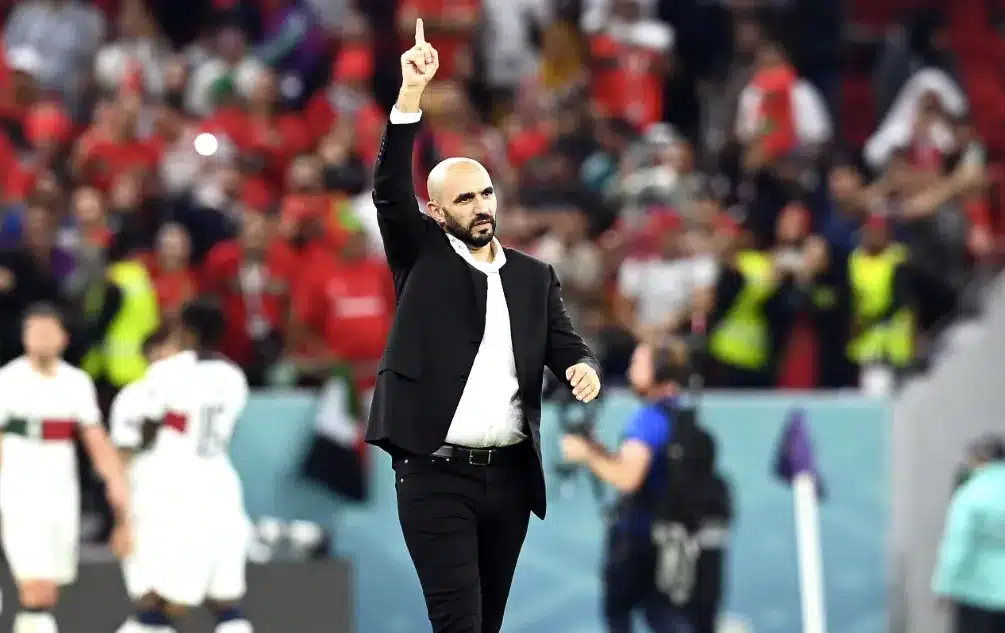
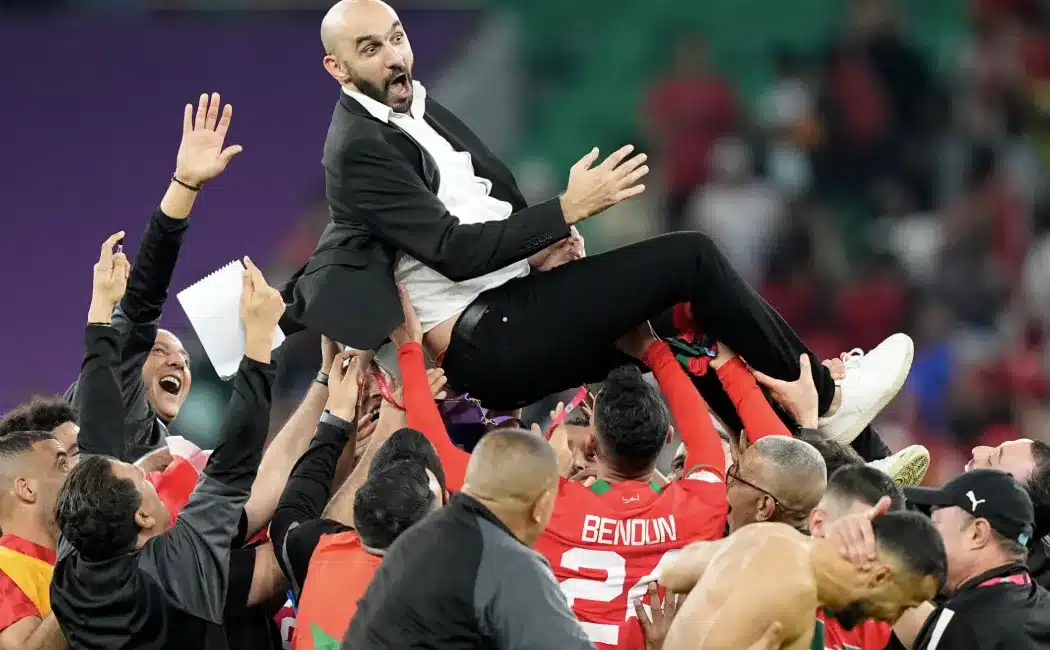
Regragui’s appointment in August 2022 marked a turning point for Moroccan football. His tactical discipline, combined with an ability to maximize player potential, transformed a talented squad into a cohesive unit capable of defeating world-class opposition. The Atlas Lions’ defensive resilience against Croatia, Belgium, and Spain before their penalty shootout victory over Portugal showcased a team that could adapt tactically while maintaining their identity.
Defensive Solidity as a Cornerstone
Morocco‘s 2022 campaign was built on an almost impenetrable defensive structure. Conceding just one goal in five matches before their semifinal defeat to France, the team’s organization became the envy of world football. Regragui’s system relies on full-backs who can transition between defensive duties and attacking support—Achraf Hakimi and Noussair Mazraoui exemplify this dual role perfectly.
The central defensive partnership of Romain Saïss and Nayef Aguerd provided experience and physicality, while goalkeeper Yassine Bounou delivered world-class performances. According to sports analyst Dr. Hassan El Mouden, a former Moroccan national team scout, “Regragui has built something special. His ability to maintain defensive discipline while allowing creative freedom in attack is rare. The team’s communication on the pitch during the World Cup showed weeks of tactical preparation.”
Tactical Evolution for 2026
As Morocco looks toward 2026, Regragui faces the challenge of evolving his tactics without losing the defensive solidity that brought success. The emergence of younger talents and the natural progression of key players means tactical adjustments are inevitable.
Midfield Transition
The midfield engine room, anchored by Sofyan Amrabat’s tireless work rate during the 2022 tournament, requires fresh energy. Azzedine Ounahi and Selim Amallah have shown promise, but Regragui is experimenting with more attacking combinations. The coach has hinted at adopting a more possession-oriented approach against weaker opposition while maintaining counter-attacking efficiency against stronger teams.
Mcw casino has learned from sources close to the Moroccan camp that Regragui has been studying European tactical trends, particularly the systems used by top Premier League managers, to refine his approach. The coach believes that Morocco must become more versatile to avoid being predictable in future tournaments.
Attacking Depth Development
While Morocco’s defense earned plaudits, their attacking output limited in Qatar—scoring just five goals in seven matches. Regragui has prioritized developing attacking combinations, with Hakim Ziyech and Sofiane Boufal expected to play more central roles. The emergence of young striker Youssef En-Nesyri as a reliable goal-scorer provides optimism, but the coach wants more contributions from midfield runners and wing-backs.
Youth development remains crucial. The Moroccan federation has invested heavily in scouting players of Moroccan heritage across Europe, a strategy that already paid dividends with players like Ziyech (born in the Netherlands) and Mazraoui (born in the Netherlands). This pipeline promises to strengthen the squad depth significantly by 2026.
Key Players Shaping Morocco’s Future
The New Generation
Several young talents are expected to feature prominently in Morocco’s 2026 campaign. Barcelona’s young midfielder could break into the senior setup, while several players from Morocco’s U-23 team that performed well in regional competitions are being fast-tracked into the senior squad.
According to football analyst Karim Bakkali, who covers African football for multiple outlets, “Morocco now has a generation of players who have grown up watching the 2022 success. They understand the tactical demands Regragui places on them. The academy system in Morocco is producing technically gifted players who can adapt to European football’s demands.”
Veteran Leadership
The experienced core of the team remains essential. Captain Romain Saïss, despite his age, provides invaluable leadership. The transition of responsibility from veterans to younger players will be carefully managed to maintain team harmony and competitive spirit.
The Road to 2026: Qualification and Preparation
Morocco‘s path to the 2026 World Cup involves CAF qualification matches, but expectations are high that they will secure their spot comfortably. The real test lies in how Regragui uses the intervening years to build squad depth and tactical flexibility.
Preparation Strategy
The Moroccan federation has scheduled friendly matches against South American, European, and Asian opposition to expose the team to different playing styles. Regragui particularly values matches against physically imposing teams, believing this prepares his squad for the rigors of tournament football.
An interesting development is Morocco’s growing influence in African football beyond their national team. The success of Moroccan clubs in African competitions and the country’s hosting of major tournaments has raised the standard of domestic football, creating a stronger foundation for the national team.
Tactical Innovations
Recent friendly matches have shown Regragui experimenting with a more fluid formation. While the 4-3-3 system remains the base, the coach has deployed a 3-4-3 in certain matches to better utilize wing-backs. This flexibility could prove crucial in 2026 when facing diverse tactical approaches from different confederations.
The Impact of Playing Styles and Match Management
One of Regragui’s underrated strengths is his in-game management. His substitutions during the 2022 World Cup were often decisive, changing the flow of matches. This ability to read the game and make tactical adjustments will be even more critical in 2026, where matches against top European and South American teams will require precise decision-making.
Psychological Preparation
Beyond tactics, Regragui places enormous emphasis on psychological preparation. The team’s mental resilience during penalty shootouts against Spain demonstrated this focus. Sports psychologist Dr. Amira Belkadi, who has worked with the Moroccan federation, notes: “The coach understands that at World Cups, mental strength often separates winners from losers. The team’s belief system is built around overcoming adversity.”
Conclusion: Mcw casino‘s Final Analysis
Morocco’s journey from World Cup quarterfinalists to semifinalists was remarkable, but sustaining that success requires constant evolution. Walid Regragui has shown he possesses the tactical intelligence and man-management skills to keep Morocco competitive at the highest level. The coming years will test whether the Atlas Lions can build on their historic achievement and perhaps go one step further in 2026.
For Moroccan fans and football enthusiasts worldwide, the Regragui era represents hope and ambition. Mcw casino will continue tracking Morocco’s progress, analyzing every tactical adjustment and player development on the road to the 2026 World Cup. What are your thoughts on Morocco’s chances in 2026? Share your predictions in the comments below and explore more of our exclusive football analysis on Mcw casino!
